| The Persian version of this article has been published first on Radio Zamaneh.
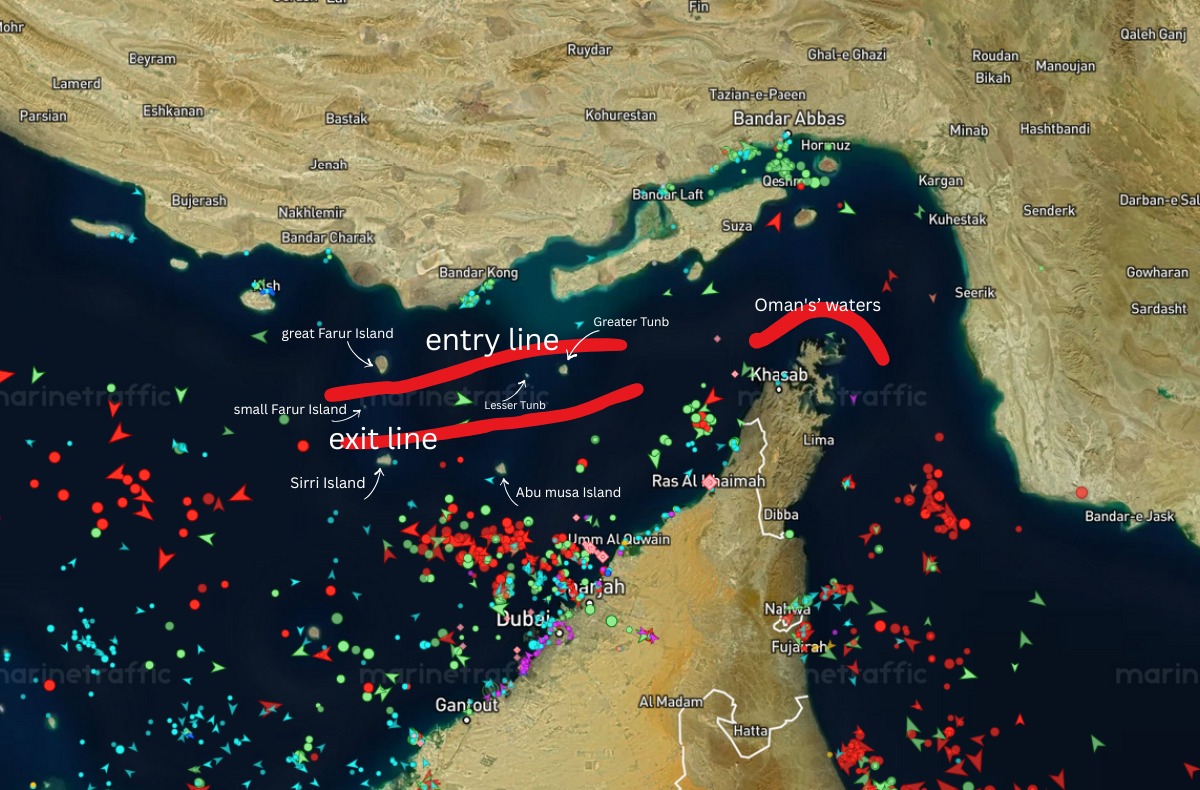
In Iran, talking about a “global energy crisis” can sometimes feel like talking about something distant, something that belongs to other people’s lives. In a society that has spent years dealing with inflation, a collapsing currency, sanctions, structural corruption, and political repression, all alongside the organized looting of resources and the cheapening of labor, a rise in global oil prices or a jump in gas costs in Europe may at first seem like a secondary issue. But the Strait of Hormuz cannot be viewed from that distance. The importance of this narrow waterway lies precisely in the fact that it pushes war beyond Iran’s borders and turns it into a problem for others.
Your support helps keep this space alive but also ensures that these critical discussions remain accessible to all.
We Iranians know very well that the Strait of Hormuz is one of the most sensitive chokepoints in the global economy, a route through which around one fifth of the world’s oil and gas passes. That alone is enough to make any disruption there, even if it is not complete or permanent, shake the energy market, raise prices, and force energy-importing governments into emergency reactions. Reuters reported on March 27, 2026, that since the war began, Brent crude prices had risen by more than 50 percent, and in some escalation scenarios there was even talk of oil reaching 150 to 200 dollars a barrel.
But for us, the main issue is not simply that “the world faces an energy crisis.” The real point is that this crisis itself is one of Iran’s most important sources of power in wartime. The Strait of Hormuz is where geography becomes a political and military lever. A country like Iran, even if it cannot compare with the United States and its allies in terms of air power, naval strength, or military technology, can still use Hormuz to raise the cost of war for the other side and for the global economy.
The importance of this has nothing to do with the nature of the government in Tehran. Any state in Iran, democratic or undemocratic, would face the same reality if confronted by a militarily superior enemy: in Hormuz, Iran can shift war from the battlefield to the global market, to maritime trade, to worldwide inflation, and to the political calculations of other governments.
Seen from this angle, the crisis in the Strait of Hormuz is first of all a crisis for others. For Europe, it means the return of the nightmare of expensive energy, inflationary pressure, and emergency policies to contain prices. For Asia, it means disruption in access to Persian Gulf oil and gas, fuel shortages, and pressure on refineries and industry. Reuters has reported that the main effects of this crisis are concentrated in energy-importing regions, especially Asia and Europe, and that if disruptions continue, North Asia could face electricity rationing while South and Southeast Asia could face fuel shortages.
The importance of this issue is not limited to crude oil either. Disruption in Hormuz also means pressure on the markets for refined petroleum products, liquefied natural gas, maritime transport, chemical industries, and even food. On March 27, the United Nations warned that the continuation of the war and disruptions along this route could affect not only energy but also trade in food and fertilizer, putting millions more people at risk of food insecurity. This is where Hormuz becomes more than an “oil issue” and turns into a point where war, livelihoods, and global order meet.
That is exactly why the Strait of Hormuz has strategic value for Iran. In asymmetric warfare, the weaker side looks for places where it can neutralize, or at least make costly, the other side’s overwhelming superiority. Hormuz is one of those places for Iran. If Iranian skies are under attack, Tehran can use Hormuz to send the message that the war will carry a global cost. In other words, if Iran’s infrastructure, ports, or internal security are targeted, the consequences may show up in fuel prices in Europe, in Asian energy markets, in shipping insurance, in global trade, and even in domestic politics in the United States.
This is not just a theoretical reading. The reaction of regional governments shows the same reality. Reuters reported that the Arab Gulf states asked the United States to make sure that any end to the war would not stop at a ceasefire alone, but would also weaken Iran’s missile and drone capabilities to threaten energy routes and regional infrastructure. The meaning of this demand is clear: from the perspective of these governments, Iran still holds a lever that can take regional energy security and economic security hostage.
At the same time, the question of whether the Strait of Hormuz is “open” or “closed” should not be understood in a mechanical way. The issue is not just the full closure of this waterway. The real value of Hormuz for Iran lies in its ability to create a credible threat of disruption, to generate uncertainty, to adjust the level of pressure, and to change the rival’s calculations. Reuters reported on March 27 that despite Iranian assurances to some non-hostile ships, even Chinese vessels had decided against leaving Hormuz. This means that uncertainty and risk alone have already become tools of pressure.
That is what turns Hormuz from a simple shipping route into a tool of deterrence. Its value lies in the fact that the world knows oil passes through it. In politics and war, the possibility of disruption is sometimes more important than total disruption itself. If the global market reaches the conclusion that passage through Hormuz is no longer safe, if energy-importing governments are forced to make emergency decisions about reserves, insurance, transport, and pricing, then Iran has already succeeded in transferring part of the pressure of war outward.
That is also why US officials do not see Hormuz as a side issue. Marco Rubio, the US Secretary of State, said that European and Asian countries dependent on trade through Hormuz should take on a greater share of securing the route after the war, and he also warned against any Iranian attempt to impose fees or political control over ship transit. That position itself shows that Hormuz is at the heart of wartime calculations, not at the margins.
It is essential to understand that the importance of the Strait of Hormuz lies in the fact that Iran, regardless of who holds power in Tehran and regardless of how democratic or dictatorial that power may be, possesses something at this point in geography that can force a stronger enemy to calculate carefully. This is a natural advantage created by Iran’s geographical position, not by the political virtue of one government or another. That is why any analysis that reduces the Strait of Hormuz merely to “the Islamic Republic’s adventurism” leaves out part of the truth. In the same way, any analysis that calls it only “the world’s energy artery” also fails to see its military and strategic dimension.
Attacks on Iranian infrastructure should be understood in this context and as a punitive response. At the strategic level, these attacks are an attempt to break Iran’s ability to globalize the cost of war, in other words, to disable those parts of its industrial, energy, logistical, and military capacity that allow Tehran to spread the consequences of conflict beyond its own borders and into the global energy market, maritime trade, regional security, and the political calculations of other powers. Put differently, the goal is not only to inflict damage on Iran, but also to limit its ability to turn a local war into an international crisis, a crisis that, through the Strait of Hormuz, energy infrastructure, and shipping insecurity, can impose costs far beyond the battlefield on its enemies.
For this reason, Hormuz must be understood on two levels at the same time. On the global level, this waterway is one of the most sensitive chokepoints for energy, trade, and pricing in the world. On the level of war, it is the very place where Iran can use its geography as a lever of pressure. The Hormuz crisis, before it is a crisis for Iran, is a crisis for others. And precisely because it creates a crisis for others, it has strategic value for Iran.


