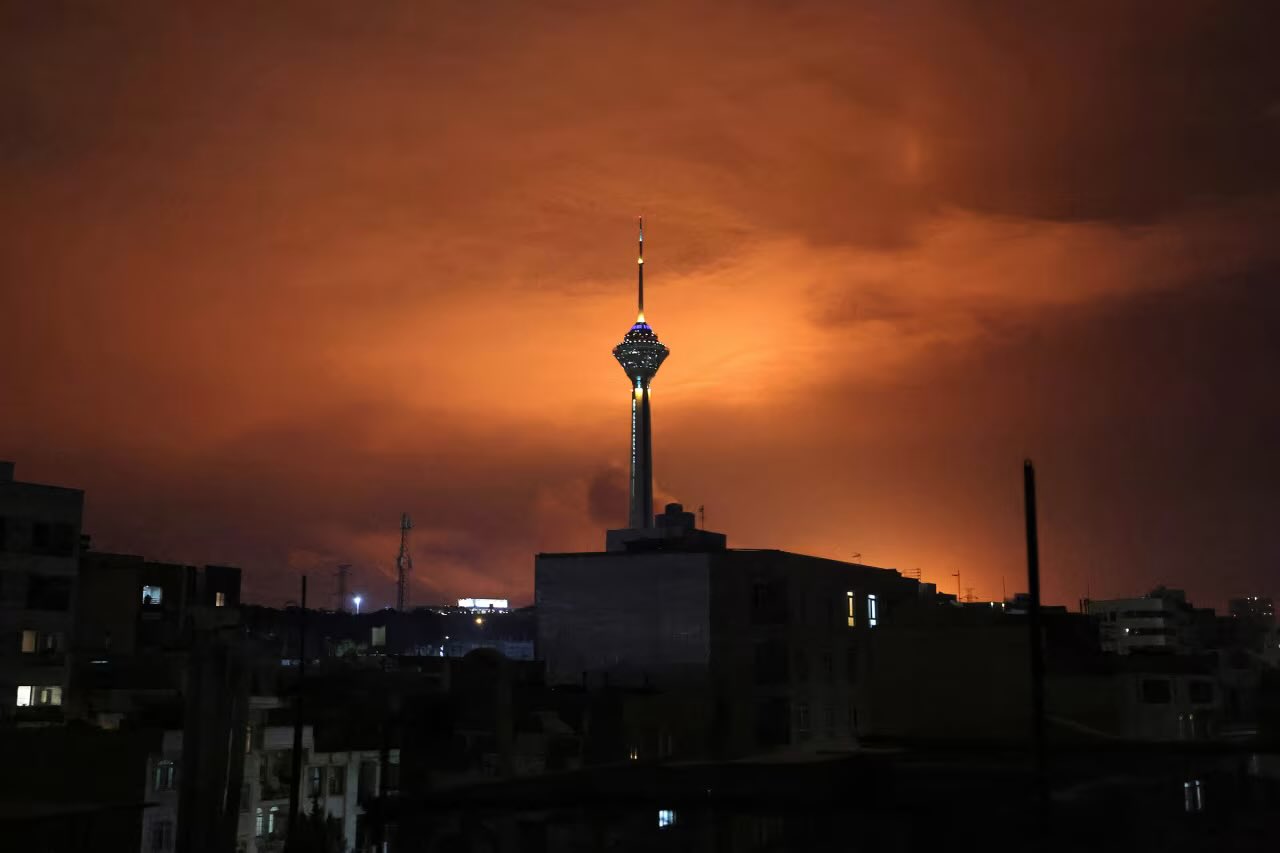
The article published by Shargh first has to be read in relation to the conditions in which it was produced. This text was not written in a free and normal setting. It was written in the middle of war, communication breakdown, public fear, population displacement, and within one of the most restricted media environments in Iran. This is not a minor point. In fact, it is the key starting point for understanding both the value of the article and its weaknesses. In such a situation, a newspaper inside Iran is trying to talk about the experience of the city, the neighborhood, dialogue, internet shutdowns, distrust toward official platforms, and the erosion of the possibility of urban participation.
The fact that such a text has been published in that environment is itself important. It shows that even in the cautious and semi-closed language still possible inside the country, it is no longer possible to hide the paralysis of collective life, the breakdown of communication, and the feeling of helplessness faced by millions of people.
Your support helps keep this space alive but also ensures that these critical discussions remain accessible to all.
In this sense, the Shargh article is not just a piece about the city. It is also a document showing that in the middle of war and crisis, people’s problem is not only missiles, drones, and sirens. The real issue is the tearing apart of the social fabric, the collapse of trust, the suspension of everyday life, and society’s inability to find its place in the chaos that has fallen on top of it. The text records this situation. It speaks of mornings when people ask themselves where they are supposed to go. It speaks of an internet shutdown that has separated society from itself.
It speaks of distrust toward official channels of communication. It speaks of neighborhoods where the memory of participation and collective work still survives in the form of pain, regret, or a deep sigh. These are the living and important parts of the article. The text becomes stronger when it comes down from abstract language and moves closer to everyday details: storing water, the closure of online groups, psychological exhaustion and suspension, and concrete examples of local experiences.
But this is also exactly where the article’s main problem begins. Its strength comes from the same place as its limitation. The article sees the effects of the crisis, but it does not fully name the mechanism that produces the crisis. It records the pain, but it only glances at the machine that creates that pain. The article says that the crisis existed even before the war began, and that perhaps this internal crisis was what led to the foreign war.
This is an important sentence, but the text does not really develop it. In the article, the internal crisis appears more like a mood than a structure. It is as if a vague condition had been hanging over the city, and then the war arrived and made it worse. But if we are going to talk about urban governance, internet shutdowns, the collapse of trust, and social hopelessness, then it has to be said clearly that these are not just the result of external attack. They are also the result of years of securitizing public space, suppressing independent institutions, weakening local organizing, top-down management, structural corruption, urban profiteering, and excluding society from decision-making.
This is where the agent of the crisis starts to disappear in the text. The internet shutdown appears as a condition, not as a political decision. Public distrust toward official platforms is mentioned, but its roots in the security state and in the experience of surveillance and control are not fully addressed. The crisis of urban participation is visible, but not as the logical outcome of a structure that only accepts real participation when it is harmless, decorative, and easy to control. The article talks about failure and disappointment, but says less about the fact that many of these failures are not simply the result of weakness. They are also the outcome of a political will to tame society and make it ineffective.
Alongside this, the article makes another important omission: class. The text speaks with the language of “we” and “the people,” but it imagines these people as a relatively homogeneous mass. It is as if everyone has the same level of ability to survive, to move, to store goods, and to make choices. This is exactly where the article’s civic language falls behind social reality. Someone who can leave the city is not in the same position as someone who has no money, no transport, or no support network. Someone who can stock water, food, and medicine is not in the same situation as a day laborer who has to buy bread for that same day on that same day.
A resident of a privileged neighborhood does not experience the urban crisis in the same way as a tenant on the urban margins, a woman heading a household, an elderly person living alone, someone with a chronic illness, an Afghan migrant, or someone who cannot move because of care work. The article speaks about the citizen, but not about the class-shaped citizen. It speaks about the neighborhood, but says less about inequality between neighborhoods. It speaks about people, but says less about the unequal capacity people have for survival, escape, resistance, and recovery.
The same issue applies to the idea of participation itself. In a decent and somewhat hopeful tone, the article defends new forms of social dialogue at the neighborhood level and brings up experiences like Sangelaj as signs that local institution-building is possible. This is not unimportant. On the contrary, it is one of the strongest parts of the piece. It reminds us that even in the middle of destruction, society is not completely shapeless and memoryless. There are still experiences of gathering, organizing, and building. The desire for social connection has not completely disappeared.
But even here, the article becomes unintentionally moralistic. It starts to sound as if the main issue is simply that people need to try again, talk more, and not give up on experience. From a human and civic point of view, that is not wrong. But it is not enough. The problem is not only a lack of collective will or a weak culture of dialogue. The problem is that in Iran, every lasting and effective form of independent social institution-building faces structural and political obstacles. Society has not just become fragmented; it has been fragmented. Trust has not just worn out; it has been destroyed. The neighborhood has not simply remained without institutions; independent institutions within it have been removed, controlled, or made ineffective.
That is why we should pause when the article says that city residents lack parties, political organizations, and civic behavior, and that we are often individualistic. If this is read without political context, it unintentionally shifts responsibility away from the structure and onto society itself. Iranian society does of course have real weaknesses in organization and collective action. But these weaknesses cannot be understood without looking at years of repression, the defeat of collective experiences, the securitization of public space, and the high cost of organizing. Society is not naturally individualistic. It is a society where the possibilities of connection have repeatedly been cut off, diverted, or punished.

Still, the Shargh article should not be dismissed because of these criticisms. On the contrary, it should be used. But it should not be used as a complete and sufficient text. It should be used as a two-layered document. On the first level, the article shows that even inside Iran’s media environment it is no longer possible to talk about the city without also talking about fear, rupture, internet shutdowns, distrust, and loss of direction.
On the second level, the same article unintentionally reveals the limits of official and semi-official language inside Iran. It is a language that records suffering, but does not fully name power. It values participation, but says less about what has suffocated that participation. It defends the neighborhood, but says less about class divisions inside the city. It speaks about people, but says less about the structures that have prevented them from becoming an organized social force.
If we want to take one important point from this article, it is this: in a time of war and collapse, the issue is not only physical survival. The issue is also the rebuilding of social ties. But that rebuilding cannot happen through a vague and agentless language. Without naming the structure of power, without seeing class, and without understanding that Iran’s urban crisis is not just bad management but a specific form of rule, calls for dialogue and local participation become, at best, a moral wish.
The value of the Shargh article lies exactly here: it both says something and gives something away. It says that society still needs the neighborhood, connection, dialogue, and forms of self-organization. At the same time, it reveals how far language inside Iran can go, and where it is forced to stop, soften, or fall silent. That is why this article should be taken seriously both for its relative courage in recording the mood of the moment and for its silences, which deserve criticism.
Simple praise is not enough, but rejecting it is not enough either. The best way to approach it is to read it as a sign: a sign of a society that, even under fire, has not let go of the question of the city and the neighborhood, but still does not have a fully free language with which to name the enemies of collective life.


