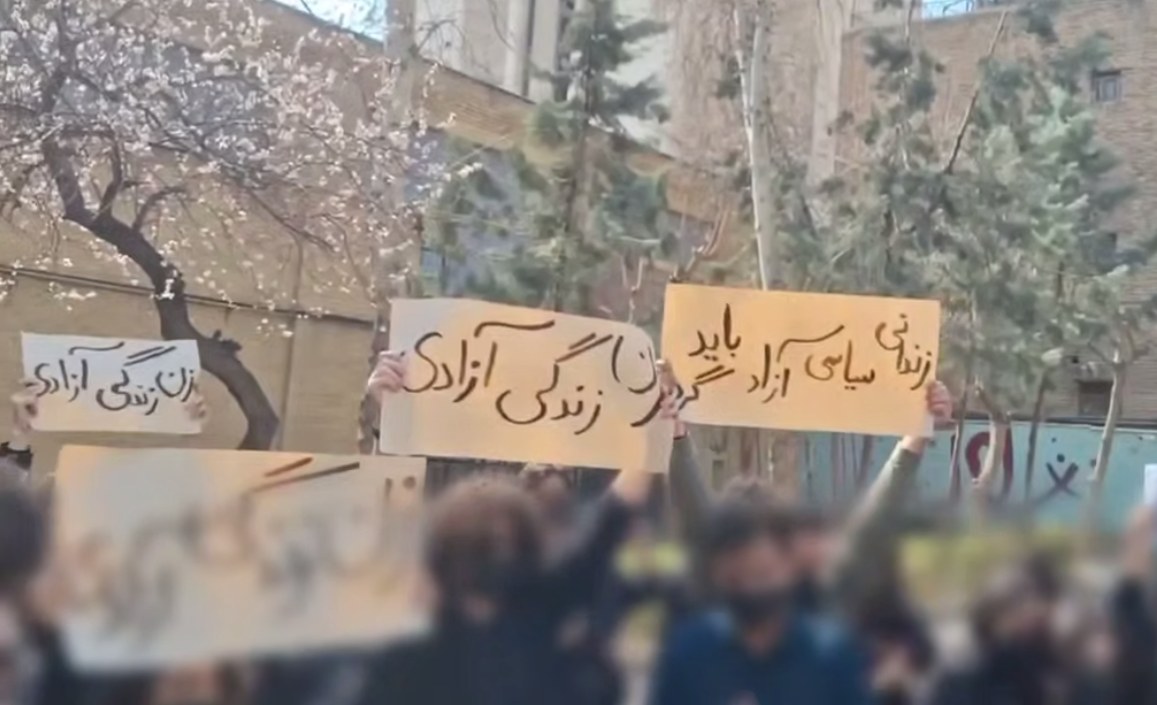
The fifth day of student protests unfolded along two tracks at the same time: on the one hand, sit-ins and rallies continued at several major universities; on the other, authorities stepped up security control, blocked some students from entering campuses, and tried to “silence the universities” by pushing classes online.
In Tehran and Karaj, the sit-in by students at Kharazmi University became one of the main flashpoints of the day. After the university announced that classes would remain online until the end of the academic year, students gathered on campus and chanted slogans such as: “We swear by the blood of our comrades, we will stand until the end,” “If it goes online, our slogans will get even sharper,” “We swear by Saghari’s blood, we will stand until the last,” and “Freedom, freedom, freedom.” Reports said the protest focused both on rejecting the online-shift policy and on honoring the memory of one of the university’s graduates.
Your support helps keep this space alive but also ensures that these critical discussions remain accessible to all.
A new rally also took place at the University of Art in Tehran. Reports described chants including “Death to the dictator,” “Political prisoners must be freed,” “Be afraid, be afraid — we are all together,” and “This fallen flower has become a gift to the homeland.” During the same gathering, students read out loud the names of some of those killed in January — a form of public remembrance that has become a regular part of campus protests in recent days.
Outside Tehran, the security atmosphere at some universities was described as unusually intense. At Shiraz University, reports said entrances were closed from early Wednesday morning and security forces were stationed along key routes, restricting students’ movement and access. In the same city, there were also reports of a gathering forming outside the main campus, and officers trying to prevent what they called the “initial core” of a protest from taking shape.
At Ferdowsi University of Mashhad, sit-ins were also reported. Students gathered in one faculty building and sang “Ey Iran.” Other reports said Basij forces tried to disrupt the sit-in, and students responded by booing and chanting: “Basiji liar, where is your student ID?”
Alongside these protests, signs of broader structural pressure on universities became more visible. According to notices that circulated, the University of Kurdistan and the University of Zanjan announced that undergraduate classes would remain “online” until the end of the year — a move that has been reported at other universities as well. Critics say the policy effectively pulls students out of shared campus space and reduces the chance of in-person gatherings.
In Tehran, reports also pointed to stricter security measures at the University of Tehran’s main campus, including more control forces at entry gates, tighter checks on movement, body searches, and bag inspections. At Alzahra University, students reported increased surveillance, tighter entry restrictions, and spot checks — including at gates equipped with facial-recognition systems.
Beyond the visible security presence, administrative and security pressure also escalated. Reports from several universities mentioned mass summons to disciplinary committees, some students being barred from entering campus, phone threats, and even the cancellation of dorm accommodation for certain students. It was also claimed that plainclothes forces entered some campuses in large numbers, including reports of buses bringing them into certain university compounds.
In response, calls circulated for coordinated legal action against what were described as “illegal” summonses — including advice such as not attending disciplinary hearings without formal written notification, watching legal deadlines, and using prepared templates to file official complaints.






Congratulation for your wonderful work to publicize the workers and people’s protests inside Iran as well as your critical stand against the current regime as well as the Xah’s one.