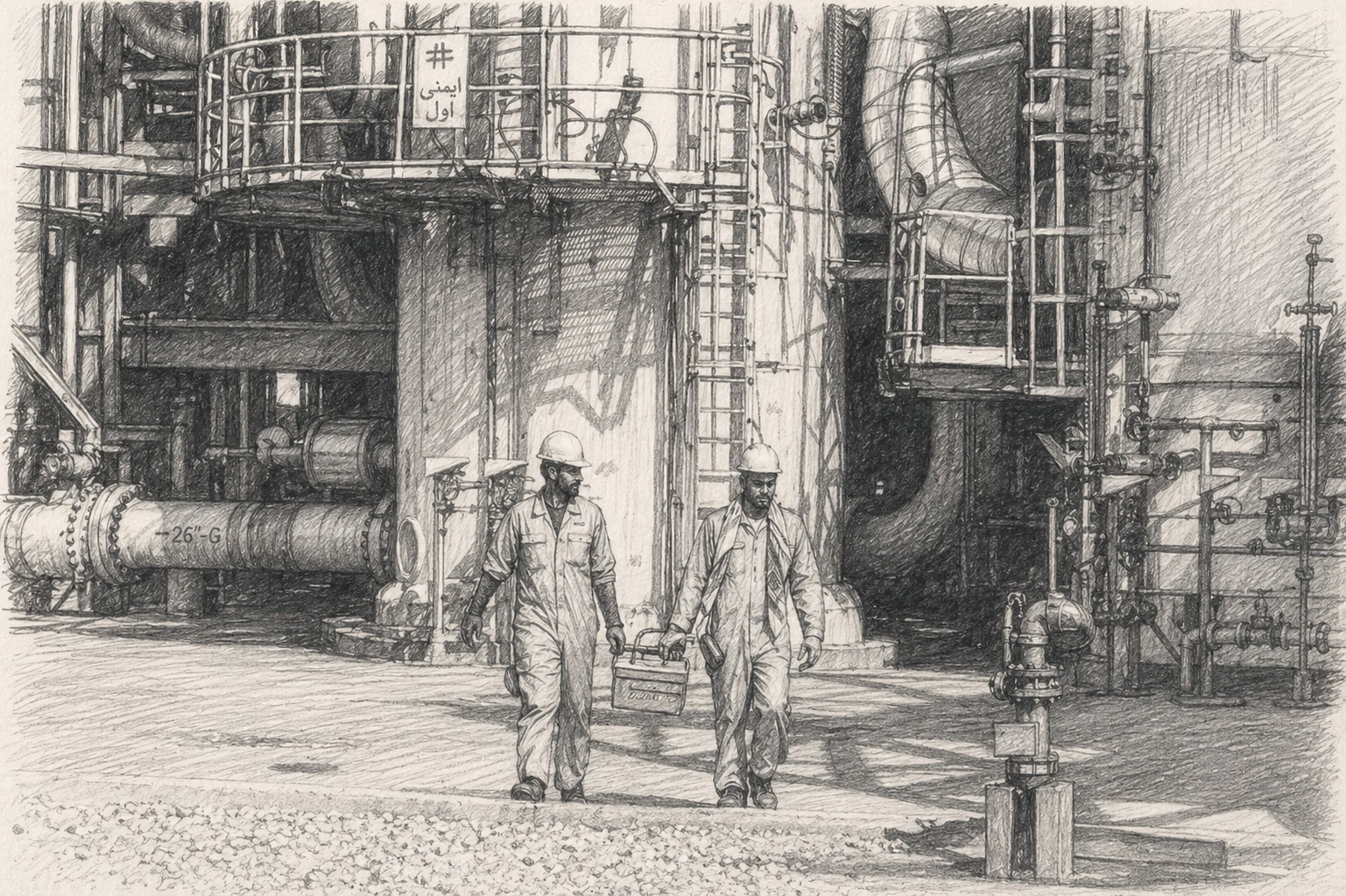
When we talk about oil, the main issue is not always what we see at first glance. The usual question is this: under war, blockade, and disruption in maritime routes, how much oil can Iran still sell? But perhaps the more urgent question is this: how much of the oil it still produces can Iran actually store?
This may sound like a technical difference, but it is decisive. If part of Iran’s oil had already left the danger zone before the escalation of war and blockade, and is now floating at sea in areas around Malacca, Malaysia, or Singapore, oil exports may not be completely frozen in the short term. For one or two months, there may still be some room for sale, transfer, or trade. But the real crisis is not necessarily where the markets and the media are looking. The main knot may form somewhere else: in the chain of production, storage, the arrival of empty tankers, port capacity, insurance, payment systems, and the return of foreign-currency revenue.
An oil well is not like a water tap that can simply be turned off and then turned back on whenever needed. Oil production is a technical, expensive, and time-consuming process. If wells are shut down, bringing them back into production is not easy. It costs money, requires operations, takes time, and may make part of production capacity vulnerable. So production has to continue. But when production continues, the oil must be stored somewhere.
Your support helps keep this space alive but also ensures that these critical discussions remain accessible to all.
This is where the issue of empty tankers becomes important. Under a naval blockade, the problem is not only whether full tankers can leave Iran. Sometimes the arrival of empty tankers near Kharg or Jask becomes even more important. Because if empty tankers cannot enter, storage is disrupted. If storage is disrupted, production comes under pressure. And if production comes under pressure, the oil export crisis turns from a sales problem into a crisis across the whole cycle of production, storage, and revenue.
This is the point from which we need to understand a naval blockade more seriously. This is not just sanctions. It is not only economic pressure either. When the arrival of empty tankers, oil storage, exports, and the continuation of production are targeted, we are dealing with an act of war. It is an act that aims to lock the country’s economic and operational capacity from within. War here does not move only through missiles and bombs. It also moves through ports, insurance, tankers, payment delays, bank accounts, storage capacity, and the slow return of oil revenue.
National oil, but separated from society
Here we need to ask a deeper question: if Iran’s oil is “national,” why is its first function in a moment of crisis not to protect society? Why, when oil sales and storage are disrupted, does the state not first think about protecting the workforce, paying wages, guaranteeing unemployment insurance, and preventing layoffs? Why has nationalized oil become a source for the survival of the power apparatus, instead of a social shield for workers?
The oil question in Iran is not only about exports, storage, or foreign-currency income. The issue is that oil, despite all the historical slogans about being national, has in practice been separated from society. Oil was taken out of the ownership of foreign companies, but it never became the real property of the people and workers. “Nationalization,” if it only means transferring ownership from a foreign company to the state, still does not mean the socialization of wealth. The state can own oil in the name of the nation, while spending its revenue inside a structure where people have no role at all.
Under the Islamic Republic, this separation has become even more naked. Oil is not the public fund of society. It is the financial pillar of the security state, opaque budgets, contractor networks, foundations, military-economic headquarters, rent-seeking projects, and expensive foreign policy. People are the nominal owners of oil, but they are absent from decisions about it. Oil workers extract the oil, keep refineries running, keep petrochemical plants alive, and keep ports active. But in a moment of crisis, they are often the first to face layoffs, suspended contracts, reduced shifts, delayed wages, and cut insurance.
In such a structure, nationalized oil exists legally, but it does not exist socially. In law and slogans, we hear about “national wealth.” But in real life, this wealth does not become a public right, livelihood security, unemployment insurance, housing, healthcare, education, or support for the workforce. Oil exists, but society does not own it. Revenue exists, but accountability does not. Production exists, but social control does not. The state uses oil in the name of the nation, but leaves the nation alone when crisis arrives.
A labor market built to abandon workers
The oil crisis lands on a labor market that has already been made defenseless, temporary, outsourced, and fragmented. A large part of Iran’s workforce does not work under stable and clear contracts. They work through temporary contracts, blank-signed contracts, contractors, project-based jobs, daily wages, and intermediary companies. This is not just an administrative flaw or a scattered violation by employers. This is how the labor market has been organized.
Over the years, job security has been taken away from workers, and the management of labor has been handed over to employers, contractors, intermediary companies, and semi-private networks. The result is that in a moment of crisis, the state does not need to openly announce that it is sacrificing workers. The mechanism it has built does this automatically. In Iran’s oil industry, depending on whether we count only the Oil Ministry or the whole chain of oil, gas, drilling, petrochemicals, contractors, and project-based work, the share of non-permanent and contract workers is estimated at least between 55 and 70 percent, and in some sections up to around 75 percent.
When production slows down, when projects stop, when oil exports are disrupted, when oil money returns late or gets blocked, the first response of this structure is clear: contracts are not renewed, shifts are reduced, overtime is removed, contract workers are pushed out, daily workers are no longer called in, blank-signed workers do not even have a document to claim their rights, and employers refer everything to “wartime conditions,” “lack of liquidity,” “suspended projects,” or “enemy pressure.”
Here, unemployment is not only a result of crisis. It is the function of the same labor-market model that has been imposed on Iran for years. A temporary contract means the worker always lives on the edge of being removed. A blank-signed contract means the worker has already lost the right to protest. Outsourcing means the main employer can hide behind an intermediary company. Project-based work means when the project stops, the worker’s life stops too. Special economic zones and semi-private companies mean labor law retreats further and further from the real life of the workforce.
The Islamic Republic has not only made labor cheap. It has also privatized the responsibility of supporting labor. It has handed the worker over to the employer, hidden the employer behind the contractor, hidden the contractor behind temporary contracts, and then, in a moment of crisis, says the issue is between the worker and the employer. But this “private relationship” is the product of public state policy. The state has not withdrawn from the labor market. It has consciously built the labor market in a way that allows it to escape social responsibility.
Unemployment insurance: a right neutralized in advance
In this structure, even unemployment insurance does not become a real tool of support. On paper, a worker who loses their job should be able to receive social protection. But in reality, a large part of the workforce is trapped in temporary, outsourced, blank-signed, daily-wage, project-based, and unstable work. This makes access to unemployment insurance limited or even impossible.
When the worker has no clear employment relationship, when their insurance record is incomplete, when they do not have the real contract in their hand, when the employer has not fully paid insurance contributions, when the contractor disappears or passes responsibility upward to the main company, the worker hits a wall even when trying to receive unemployment insurance. At this point, we are not only dealing with layoffs. We are dealing with the removal of workers from the field of social protection.
This removal is not accidental. An unstable labor market was not built only to keep wages low. It was also built to escape social obligations. A worker without a contract is easier to fire. A worker without full insurance is easier to push out of the support system. A worker without an organization cannot turn their removal into a public issue. A worker whose contract is renewed every few months is always negotiating for survival, not demanding rights.
So when an oil and war crisis reaches production, the worker is hit twice. First from outside, through blockade, disruption of production, stalled projects, and falling income. Then from inside, through a labor structure that has made them defenseless, contractless, uninsured, unorganized, and disposable. External pressure suffocates the economy. The internal structure of the labor market allows that suffocation to be transferred directly into the worker’s home.
When disaster becomes private
From this angle, unemployment should not be seen only as a “side effect” of war or recession. In Iran, laying off workers in times of crisis becomes a method of governance. The state does not need to officially announce that it is stepping back from responsibility for people’s livelihoods. It is enough to keep the same contractor system, temporary contracts, absence of independent unions, and weak unemployment insurance untouched. The market does the rest; a market already organized in favor of employers and against workers.
On the surface, the employer fires the worker. On the surface, the contractor does not renew the contract. On the surface, the project has stopped. On the surface, the company has no liquidity. But in reality, these are links in a political chain. A state that has weakened labor law, repressed independent organizing, expanded outsourcing, normalized temporary contracts, and tied unemployment insurance to a maze of paperwork, insurance records, and employer approval cannot separate itself from the consequences of these layoffs.
This is the privatization of disaster. The crisis is public, but its cost becomes private. The war is public, but unemployment becomes individual. The blockade targets the country, but the worker must face the landlord, the bakery, the pharmacy, the school, debts, and medical costs alone. The state talks about the “nation,” but when it comes to support, it reduces the worker to an administrative file, a workplace dispute, or a private relationship with the employer.
The absence of independent labor organizations and independent media completes this process. When workers do not have independent organization, unemployment and delayed wages turn into scattered and silent experiences. When there is no independent media, especially workers’ media, the worker’s voice is removed from the public field. As a result, the state and employers can narrate the crisis in their own language: “lack of liquidity,” “special conditions,” “enemy pressure,” “the necessity of production,” “national endurance.” But behind these words are families losing their income, with no independent institution able to turn their suffering into a public demand.
Sanctions are real, but they are not enough as an excuse
Sanctions and war are real. The naval blockade is real. Targeting tankers, insurance, ports, storage, and oil revenue is an act of war against Iran’s economic capacity. But the reality of external pressure should not give the government permission to hide the internal structure of exploitation. The Islamic Republic uses external pressure to justify something that existed long before the war: the privatization of crisis, the cheapening of labor, the fragmentation of the workforce, the repression of organization, and the escape from social responsibility.
This model was not created today. Years before this crisis, temporary contracts had already become normal. Contractors and intermediary companies had already expanded. Special zones and large projects had already been pushed away from real workers’ supervision. Workers already had to strike just to receive delayed wages. Teachers, retirees, nurses, and industrial workers had repeatedly turned the street into an office for livelihood demands. So war and sanctions are not the cause of everything. They intensify an existing crisis and give the government a new language to justify it.
This difference matters. If everything is reduced to war and sanctions, the government escapes internal responsibility. But if external pressure is ignored, the reality of blockade and economic warfare disappears. A serious analysis must see both at the same time: the blockade targets economic capacity from outside; the state distributes the cost of this attack along class lines from inside. One closes the breathing path of the economy; the other closes the worker’s path of social defense.
Resistance without workers is just another name for austerity
If economic war is being waged against the country, then the government’s first duty should be to protect the workforce: banning layoffs in crisis-hit units, immediately paying delayed wages, guaranteeing unemployment insurance for all dismissed workers, including contract, project-based, blank-signed, and daily-wage workers, forcing the main employer to take responsibility, removing intermediary companies from vital projects, automatically extending temporary contracts during the crisis, controlling the price of basic goods, and recognizing the right of workers to organize, because without organization they have no power against this wave.
But the Islamic Republic runs away exactly from this point. Because real support for the workforce is not just a welfare decision. It changes the balance of power in society. A worker with real unemployment insurance is less easy to threaten. A worker with a permanent contract is less likely to remain silent. A worker with an independent organization can turn the crisis into a public issue. A worker who can protest collectively will not allow war and blockade to become excuses for making labor cheaper and workers more disposable.
That is why the regime prefers to talk about resistance, but does not want resistant workers. It wants obedient workers. Workers who endure, but do not demand. Workers who sacrifice, but do not organize. Workers who live under the pressure of war, but do not ask the state for accountability. This is the hidden class policy inside the war economy.
Oil may remain floating at sea, but workers must not be abandoned on land. If the government talks about economic war, it must first defend those whose lives collapse with every interruption in production. Without this defense, “wartime conditions” is only a more respectable name for making labor cheaper, making workers more defenseless, and allowing the state to escape social responsibility.
The final question is not how much oil Iran can sell. The question is why the oil produced in the name of the nation does not serve the nation in a moment of crisis. Why does nationalized oil, instead of backing workers, back an apparatus that abandons them? Why does a state that speaks of economic war refuse to pay the cost of defending society?
The answer lies in the structure of power itself: oil is national, but not social; the state exists, but it is not accountable; production exists, but there is no workers’ control; resistance exists, but there is no support for workers. In such a situation, oil remains on water, and the worker falls on the ground. This is not only the image of an economic crisis. It is the image of an order that has separated public wealth from society, and when crisis arrives, sends poverty into workers’ homes.


