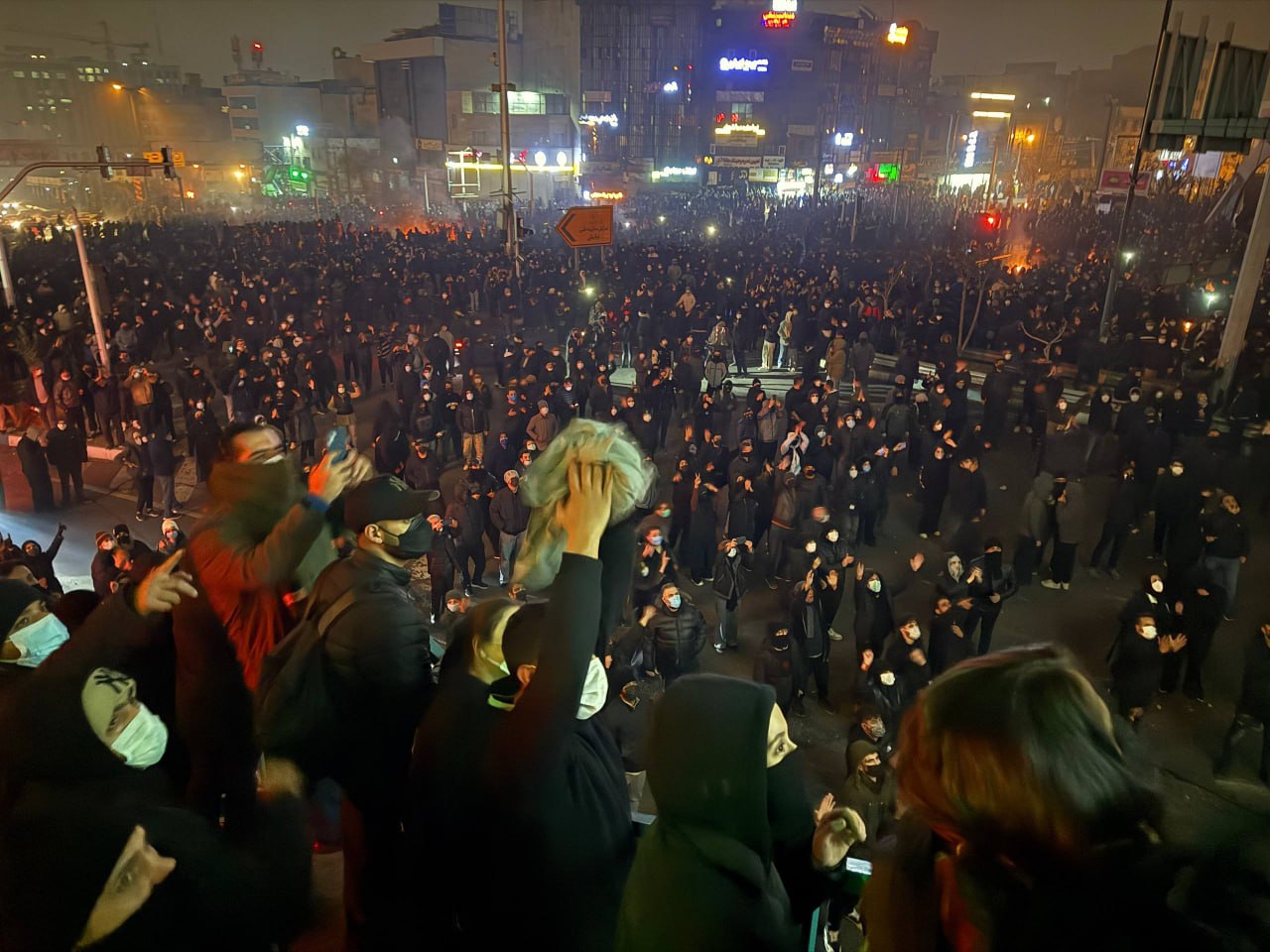
Let us look at the claim of “foreign interference” by Mossad and the CIA in Iran’s protests not through simple denial, but through political and material analysis. This text is written for those who care about Iran’s future, who oppose war, foreign intervention, and falling under imperial domination, and who at the same time do not want to sacrifice the agency of society to security or geopolitical narratives.
Iran is a large country with a population of around 86 to 90 million people and nearly 500 cities. From north to south and east to west, it is a vast land with wide linguistic, cultural, and social diversity. Any analysis that tries to reduce widespread and repeated protests across dozens or hundreds of cities to a “foreign operation” must first answer a simple question: how exactly was this level of social spread and long-term continuity organised, through what networks, and by what force?
If we assume that foreign intelligence agencies were able to carry out violence, organisation, or provocation in a large number of these cities, then the first thing that comes into question is the effectiveness of the regime’s own intelligence and security system. How is it possible that a student, a teacher, a nurse, a worker, a writer, or a researcher is under constant surveillance, interrogation, and systematic repression, while at the same time foreign intelligence forces are supposedly able to enter the country with weapons, networks, and wide coordination and operate freely? This is the internal contradiction of the security narrative: a story that claims to explain everything but fails the most basic test of reason.
Here, conspiracy thinking replaces politics at the exact moment when the ruling power wants to remove responsibility for the crisis from itself and strip society of its right to independent action. Blaming social movements on “foreign hands” is neither analysis nor exposure; it is a political technique used to deny popular agency and justify repression. It is the same logic that labels every workers’ protest, every teachers’ gathering, and every women’s movement as a “project of the enemy.”
Civil and social movements in Iran have had clear, repeated, and historical demands:
the freedom to organise independently of the state,
the freedom to form political parties,
and freedom of expression.
These three demands have been the backbone of protests over the past decades and have been continuously suppressed. Any analysis that ignores this continuity or reduces it to an external cause is, consciously or not, reproducing either the narrative of the Islamic regime or its Western geopolitical version. Both narratives share one thing: they remove the people as political subjects.
Iran’s crisis is not the result of sanctions alone, nor the outcome of a foreign conspiracy. It is the product of accumulated structural crises within a rent-based, security-driven capitalist economy. Sanctions could have been managed, but systemic corruption, rent-seeking, the deep ties between security and military institutions and the economy, and the shifting of costs onto wage earners have turned the crisis into an explosive livelihood situation. The logic of the market and profit in Iran works the same way it does elsewhere: exploitation of labour, denial of workers’ rights, socialised poverty, and privatised profit.
Protests in Iran did not emerge in a vacuum, nor are they the sudden result of sanctions or “hidden hands.” They are a social response to an economic and political order that has closed the paths of reform, organisation, and expression while pushing everyday life pressure to the limit. Explaining this situation through foreign interference not only produces an empty analysis, but also—knowingly or not—pushes society into one of two hostile camps: either defending repression in the name of “resistance,” or welcoming intervention in the name of “rescue.”
A material and emancipatory analysis moves beyond this false choice. The core of any liberating politics in Iran is the conscious agency of the people, the struggle for unconditional political freedoms, and the rejection of any system that turns human life, labour, and dignity into tools for preserving power or profit.
In conclusion, one basic point must be made clear: foreign interference cannot be denied, nor should it be naïvely ignored. Foreign governments and intelligence agencies always try to take advantage of existing cracks, crises, and social discontent. This is a reality of global politics. However, recognising this reality must never turn into reducing social protests in a country as large and complex as Iran to a simple “product of foreign interference.”
Ignoring foreign interference is a mistake, but exaggerating it at the cost of erasing the agency of the people, along with their history and lived experience, is a far more dangerous political and analytical error. Such a narrative neither understands society nor offers any path toward liberation. It only removes responsibility from those in power and strips social protest of its meaning.


