Europe’s migration policy produces deniability through distance. A document leaked to Statewatch this month confirms what many have warned about for years. The European Union’s naval mission, Operation Irini, has signed a technical agreement to train and equip coastal forces in eastern Libya. The mission is also to establish a migration coordination centre in Benghazi.
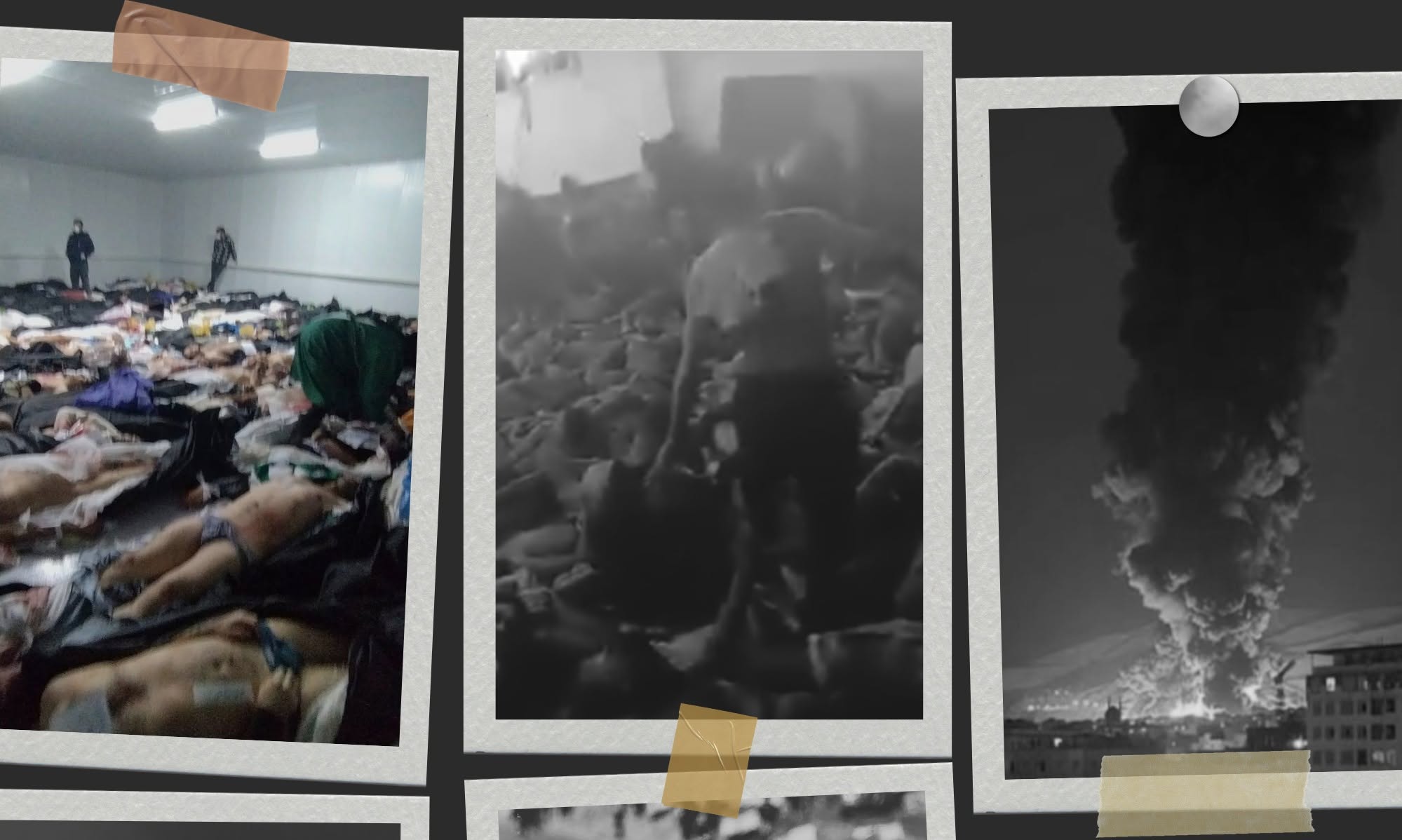
Benghazi is under the control of Khalifa Haftar. Brussels once described Haftar as an outcast. His forces have a documented record of abusing migrants. The result is clear: more interceptions, more returns, and more bodies pushed into a detention system known for mass graves and rooms where people are packed shoulder to shoulder, without enough space even to sit.
Violence does not always need blood to be present. Violence also has a bureaucratic form. It puts hundreds of people in a room never built for that number, then calls this “migration management.” The document shows the system working exactly as designed. The camp is in Libya by design. Europe pays Haftar because Haftar does the work Europe does not want to be seen doing.
Your support helps keep this space alive but also ensures that these critical discussions remain accessible to all.
Germany’s chancellor gave this logic a name. At the G7 summit in June 2025, when asked about Israeli attacks on Iran, Friedrich Merz called them “the dirty work Israel is doing for all of us.” The crucial detail is this: the journalist introduced the word Drecksarbeit, and Merz thanked him for it. The Lemkin Institute later reminded people that Nazi officials once used the same word to make their crimes sound like routine labour.
Dirty work is the whole mechanism. The employer wants the result without paying the cost of producing it. The cost is handed to a contractor. The contractor commits the violence. The employer escapes the blame. Distance makes this denial possible. In Libya, the distance is geography. In West Asia, it is geopolitics.
Once you see the mechanism, the examples line up. In January, Italy arrested a Libyan man wanted for war crimes, then sent him back to Libya on a state aircraft. He was useful for migration control. The European Union signed a €7.4 billion partnership with Egypt. Part of that money is the price of border control. Libyan coastguard units, funded and coordinated by Europe, have fired on rescue ships. In each case, a real human being disappears into a managerial abstraction. The migrant becomes a flow to be managed. The person who suffers the work disappears.
Israel belongs inside the same logic. This is the hardest part to say, so it must be said carefully. European antisemitism was real and horrific. It led to the Shoah. Instead of settling accounts with that crime, Europe exported it. Europe outsourced the cost of its racial violence to Palestine. There, people who had survived European persecution were placed in a position where they drove another people from their homes and land.
Edward Said called Palestinians “the victims of the victims of Europe.” This does not reduce Israel to a European pawn. That frame would reproduce the antisemitic cliché of the Jew without agency. Europe outsourced. The Israeli state acts. Both are true at the same time. Merz completes the chain. A state built as Europe’s displaced answer to its own crime is now the contractor of Europe’s regional dirty work against Iran.
Look at what defenders of this war reach for: “the clash of civilisations,” the front line that Israel supposedly holds for the West. This clash is not the cause of the violence. It is the product of outsourcing and its justification. Outsourcing creates the same civilisational gap it claims to defend against. Then that gap justifies the next round of outsourced force. The schools and clinics flattened in Iran, the civilians counted inside the miserable language of “precision,” are the price of a war European leaders approve because someone else pays for it in blood.
Part of the left reverses the same work. Refusing to name this is another form of cowardice. Real solidarity with Palestine has a concrete address: the arms factory you blockade, the weapons shipment to Israel you stop, the deportation flight you ground, the border regime you fight where you stand. The campist left outsources even this.
Instead of fighting at home, it outsources its anti-imperialism to the “Axis of Resistance,” in practice to the Islamic Republic. The Iranian worker, the Iranian woman, the protesting teacher, the executed prisoner all fall out of the frame. What remains is exactly what the authoritarian state repeats about itself. Nobody asks how life inside Iran works, or what local forces think about confrontation with the West. The regime’s self-description becomes left analysis.
This solidarity belongs to a slogan. People fall out of the equation. The costs are material. War and sanctions fall on Iranian wages and on the most basic security of a job. The regime finances its “resistance” through the hunger of its own population and silences it through its own prisons. Campism erases exactly the point where livelihood, repression, and war meet.
Two years have passed since I faced intense verbal violence because I described the slogan “Long live the weapons of resistance” as reactionary and indifferent to human life. During this time, we have seen many performances. Many people from the region I belong to have made sharp criticisms of this Western performative politics. But they are rarely visible. Censorship, both in regional media and among those who call themselves progressive, is too strong to tolerate criticism of good-hearted Westerners.
Still, the criticism must be made. The words must be said, even at a high cost. For me, at least, what could cost more than becoming a refugee in another country, under the heavy pressure of anti-refugee and anti-migration policies?
Deliberate reduction of human beings into nothingness.
— David Yambio (@DavidYambio) May 28, 2026
For years, this is what we have fought to make visible: EU-funded concentration camps in Libya where enslaved “migrants” and “refugees” are detained en masse, shoulder against shoulder, body against body, with barely enough… pic.twitter.com/ZfxzecMNXE
For years, this is what we have fought to make visible: EU-funded concentration camps in Libya where enslaved “migrants” and “refugees” are detained en masse, shoulder against shoulder, body against body, with barely enough room to turn or sit upright. Exhaustion, dehydration, disorientation, heat, suffocation, darkness, sheer collapse—you name it.
One does not need visible blood for violence to be present. Sometimes violence is architectural, administrative, and above all a decision to place hundreds of enslaved people in a room never meant to contain them and then call it “migration management.”
And yet these performances have the same effect as the European Union’s policy. Brussels strengthens the same warlord it once called an outcast. The campist left abandons Iranians fighting the regime and pushes them toward monarchist networks and the far-right diaspora. In both cases, denial strengthens the reactionary force it claims to contain.
The categories of left and right collapse at this point. In the metropolis, the fight between left and right over rights, wages, and parliament is real. At the colonial border, where the “other” appears, that fight dissolves into consensus.
Germany’s reaction to Merz showed this clearly. His Social Democratic and Green critics attacked his tone. They called it clumsy and strange. One leading Green figure added that the fall of the Iranian regime would, of course, be desirable. The argument was about manners. The logic of outsourced war remained untouched.
Liberal parliamentary democracy keeps human rights and democracy as goods reserved for its own subjects. The moment it faces someone outside that circle, it returns to the same colonial mechanism, no matter which party is in power.
The worst part of being a left-wing political refugee from Iran is facing this logic among those who were supposed to fight it.
The campist left outsources even this. Instead of fighting at home, it outsources its anti-imperialism to the “Axis of Resistance,” in practice to the Islamic Republic. The Iranian worker, the Iranian woman, the protesting teacher, the executed prisoner all fall out of the frame. What remains is exactly what the authoritarian state repeats about itself.
Nobody asks how life inside Iran works, or what local forces think about confrontation with the West. The regime’s self-description becomes left analysis.


Greetings Siavash:
Very good article.
Best wishes,
Matthew
Why lament the injustice of the Nakhba while concealing from your readers the Arabs’ embrace of Nazi antisemitism, combining it with Qur’anic permission to kill Jews? The Arab leader in Jerusalem, Amin al Husseini, had tea with Hitler, toured a concentration camp, raised a Muslim SS Battalion, propagandised for the Nazis throughout the war, & promised that if the Germans won, he would set up extermination camps for Jews all over the Middle East. Germany lost, so the newly invented Arab states had to content themselves with stripping 850,000 MENA Jews of everything they owned, then forcibly driving them out, making their new countries wholly Islamic and Judenrein.