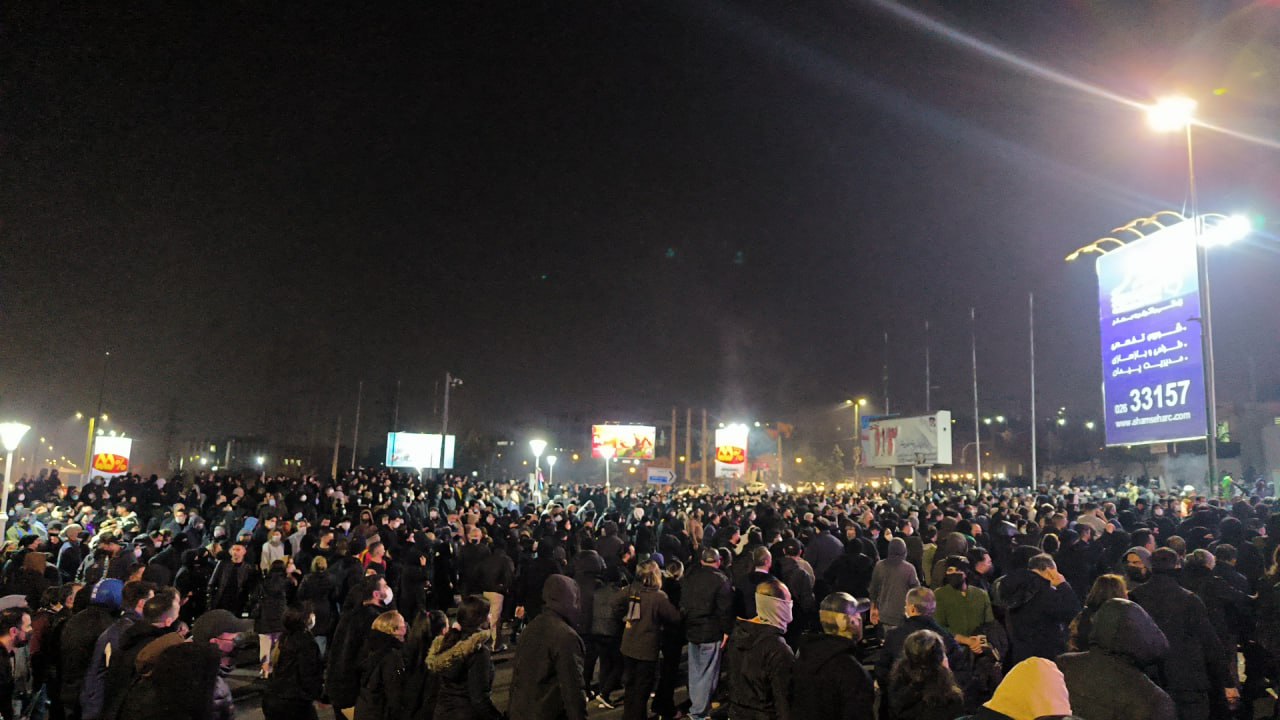
When a BBC News journalist standing in a major Iranian city describes the scene as “a public holiday … like a family festival,” it isn’t simply a matter of ordinary reporting. At a moment when the Iranian state’s forces have killed thousands of protesters and communication blackouts have been used to conceal evidence of violence, that kind of framing does political work. It normalizes an ongoing crisis and, in doing so, risks acting as a vector of the state’s own narrative.
The context matters. Beginning in late December 2025, mass demonstrations erupted across Iran, driven by economic strife and political discontent. On 8–9 January 2026, security forces—acting under orders from the highest levels of the state—opened fire on demonstrators in cities such as Tehran and Rasht, and imposed a near-total internet shutdown that severely limited documentation of the violence. Estimates of the deaths from those two nights alone range from several thousand to tens of thousands, according to multiple independent sources and human rights organizations, with some reports suggesting the total death toll could be dramatically higher as evidence continues to filter out under blackout conditions.
Your support helps keep this space alive but also ensures that these critical discussions remain accessible to all.
These events are not distant history. They are unfolding now, amid ongoing repression, arbitrary arrests, and further crackdowns on reformists and dissenting political actors.
In such conditions, what does it mean when a foreign correspondent describes a city as festive? To answer that question, we need to look at how authoritarian media environments operate. When a state subjects a population to mass violence and then controls the narrative—cutting off the internet, censoring local media, criminalizing independent reporting—it constructs a sanitized image of continuity and everyday life. That image is intended for both domestic and international audiences: domestically, it signals that the state has regained control; internationally, it insulates the regime from scrutiny and political pressure by projecting an image of stability.
Media coverage that uncritically replicates that image without sustained contextual anchoring effectively does part of the same work. It tells audiences outside the country: here is “normal life.” It implies the crisis is over, or that the violence was isolated, or that the regime has regained legitimacy. In reality, the crisis is ongoing. Thousands remain missing or detained. Nobel Peace Prize laureate Narges Mohammadi, among many human rights activists, has been violently arrested and sentenced to additional years in prison amid the crackdown.
The distortion works through omission as much as through words. Silence about the scale and character of violence—the shootings, the killings, the murders of wounded protesters in medical facilities, according to some reports—creates a gap that official state narratives can fill.
Critics of international media coverage have documented this pattern: when initial attention to Iran’s uprising waned, some outlets shifted toward frames that parroted regime talking points or minimized the explicitly political nature of the unrest.
This is not a claim about bad intentions. Journalism is under enormous pressure in closed societies. Verification is difficult when the internet has been cut. Reporters are constrained by access—and in Iran, the state has a long record of surveilling, intimidating, and targeting journalists and their families.
But the result is consequential. Framing language like “festival,” “normal life,” and “holiday” does more than soften the narrative; it rearranges the moral geography of an event. When tens of thousands have been killed in a matter of weeks and arrests continue, to foreground festive imagery without anchoring that language in the broader picture is to understate the scale of repression and, in practice, to echo the state’s own strategy of narrative control.
Objectivity in journalism should not mean presenting violent repression as if it were ordinary life. It requires proportion. It requires coupling descriptions of what is visible with what is systematically invisible—mass killings, communication blackouts, arbitrary detention, forced disappearances. It means contextualizing every cheerful scene with the knowledge that a regime facing a legitimacy crisis has a powerful interest in staging images of tranquillity.
The danger of failing to do this is not theoretical. It shapes international perception, diplomatic responses, and how global audiences understand the legitimacy of the regime. If reporting signals the crisis has passed when it has not, it indirectly reduces the urgency of external scrutiny and solidarity with those targeted by repression.
At issue is not whether families gather in public spaces. That happens everywhere. The question is whether a single snapshot, framed without context, should stand in for a broader and brutal reality. When coverage places normality in the foreground and repression in the background, the result is not neutral. It contributes to a narrative of stability that obscures complicity in the ongoing suppression of dissent.
Iranians are still asking for justice, accountability, and recognition of the violence they have suffered. Media that fails to hold those together under the weight of reporting risks, helping to bury those demands under the veneer of everyday life.