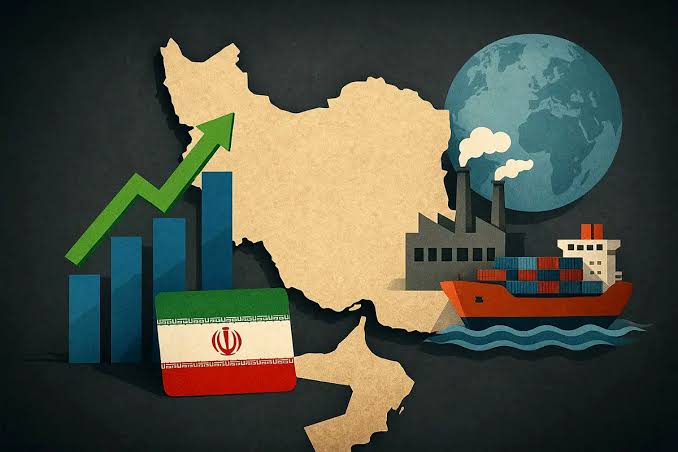
A Conversation with Mehrdad Vahabi on Property Rights, Privatization, and the Economic Foundations of Secularism
This Interview examines how the Islamic concept of Anfal has shaped property relations in the Islamic Republic and blurred the line between state, public, and private ownership. Drawing on a conversation with economist Mehrdad Vahabi, it argues that Iran has developed a sphere of economic power that uses state institutions and private companies while remaining largely outside ordinary public oversight.
The Interview traces this structure from Article 45 of the Constitution through privatization, the growth of quasi-state institutions, sanctions, and contracting networks. It also shows how this system has weakened the formal state’s capacity to fund public services while concentrating wealth and authority in institutions linked to the Supreme Leader.
The discussion ends with a broader argument that secularism in Iran can’t be reduced to separating religion from government. It must also address the economic institutions, property rights, and material resources that sustain religious power.
Note: The Persian version of this interview was published in Radio Zamaneh. This version was translated by AI and edited by myself. If there are any points whose economic and political implications are not clear, please be sure to mention them in the comments so I can edit them.
When we talk about the structure of Iran’s economy, the discussion usually moves between two poles, the state and the market. How big is the state? How much of the economy has been privatized? What share belongs to the so-called quasi-state companies? And how do the Revolutionary Guards, the foundations, and institutions under the Supreme Leader operate inside the economy?
In my conversation with Mehrdad Vahabi, an economist and political economy researcher, I put the question a little differently. Where exactly is the line between anfal, state property, public wealth, quasi-state enterprises, and private capital tied to political power? And how did this structure become a logic that now shapes the whole Iranian economy?
His answer took the discussion beyond the usual division between the state and the private sector. In Vahabi’s account, the Islamic Republic has created a field of ownership that can’t easily be called state, private, or public in the sense of people having control over their common wealth.
This field uses the machinery of the state, but it doesn’t necessarily follow the state’s rules. It enters the market, but doesn’t allow big capital to operate independently of political power. And it speaks in the name of the public and Islam, without being under public control.
To understand this structure, Vahabi started with the idea of property itself.
Your support helps keep this space alive but also ensures that these critical discussions remain accessible to all.
Legal Ownership Isn’t the Same as Economic Appropriation
In everyday language, the owner is the person whose name appears on the deed. But in political economy, legal registration is only one part of ownership.
You also have to ask who manages the asset, who gets its income, who can sell it, and who has the right to stop others from using it.
Vahabi first pointed to a distinction in the Marxist tradition, between ownership in the legal sense and appropriation in the economic sense.
“The question you’re asking brings us directly to the issue of ownership. In economics, one approach is the one Marx developed. There, appropriation matters more than the legal form of ownership. Ownership has an institutional and legal dimension, while appropriation has an economic one. Marx stressed that legal relations don’t necessarily reflect ownership in its economic meaning.
“Under capitalism, the direct producer is separated from the means of production. The factory worker doesn’t own the machinery or the tools of production. What the worker owns is their own labour power. Capital stands opposite them. From this point of view, whether the legal form of ownership is private or state-owned isn’t the main issue. As long as the direct producer remains separated from the means of production, the economic substance of the relationship hasn’t changed.”
Put simply, the fact that a factory belongs to the state doesn’t mean the workers really own it. If workers remain excluded from decision-making, management, and control over what they produce and the profits from their work, changing the legal title from private to state ownership doesn’t necessarily change the social relations of production.
But Vahabi immediately added that this definition isn’t enough for examining property rights in the Islamic Republic.
If we explain every state, private, and quasi-state form simply as different expressions of the same class relation, we lose the ability to understand the difference between the Ministry of Petroleum, the Foundation of the Oppressed, a private company, and the Social Security Organization.
“If we only follow that Marxist approach, your question gets answered in the first line. All these forms are private, because the direct producer is separated from the means of production. But then we can’t distinguish between state ownership, anfal, Justice Shares, non-governmental public institutions, and private capital.
“To answer your question, I have to return to an institutional approach. We need to look at how property rights are defined, who receives the residual income from an asset, and who has the final authority to manage it and exclude others from using it.”
Vahabi referred here to several intellectual traditions and economists. American institutional economist John R. Commons didn’t see capitalism simply as a mode of production. He stressed the role of laws, contracts, and legal institutions in the formation of capital.
Ronald Coase and researchers influenced by him, including Yoram Barzel and Steven Cheung in the Washington tradition of transaction-cost economics, also showed that ownership can’t be understood without looking at the costs of contracting, transfer, and enforcement.
Barzel distinguished between legal ownership and economic control over an asset. For him, if someone has the actual power to appropriate and control an asset, that power matters economically even when the official title is in somebody else’s name.
Nobel Prize-winning economist Oliver Hart and John Moore also explained ownership through the theory of incomplete contracts and what they call “residual rights of control.” In other words, when a contract says nothing about every possible future situation, who gets the final say?
Vahabi puts it this way.
“Property rights aren’t only about whose name appears on a document. We have to ask who has the right to the residual income from an asset and who can exclude other people from using it. Ownership means authority. It means having the final power to decide what happens to the asset.
“This institutional view matters for understanding Iran. An asset may officially be classified as state-owned or non-governmental public property, while its real control sits somewhere else. The state may pay the cost of running it, but the final decision-making power, or the right to appropriate its income, may belong to another institution.”
Vahabi gave this long theoretical introduction for one reason. To understand ownership in the Islamic Republic, we can’t just look at the official names of institutions. We have to find where the real authority sits.
Article 45 Matters More Than Article 44
In discussions about Iran’s economy, Article 44 of the Constitution gets far more attention. It divides the economy into three sectors, state, cooperative, and private. Later, it also became the basis for policies the government called privatization.
But for Vahabi, Article 44 doesn’t by itself define ownership. The more important article for understanding what makes the Islamic Republic’s economy different is Article 45.
Article 45 says that anfal and public wealth, including uncultivated or abandoned land, mines, seas, lakes, rivers, forests, reed beds, estates without heirs, and property whose owner is unknown, are at the disposal of the Islamic government, which is supposed to use them according to the public interest.
“What is economically new in the Constitution of the Islamic Republic isn’t Article 44. Article 44 defines three economic sectors, state, private, and cooperative. These aren’t three types of ownership. They’re three economic sectors.
“The question of ownership in the Constitution of the Islamic Republic comes up in Article 45, not Article 44. Article 45 is where the Islamic Republic shows what is new about its system and introduces the concept of anfal. If you want to find the fundamental difference with the Pahlavi system, this is where you have to look.”
This distinction is essential for what comes next.
If oil, forests, or mines are state property, then the state manages them as a public institution. At least under a modern idea of government, those assets should appear in budgets and accounts and remain subject to law, auditing, and public oversight.
But in Shia jurisprudence, anfal isn’t necessarily property belonging to the people or even to Muslims collectively. Anfal refers to assets placed under the authority of the Imam or the Islamic ruler.
In the Islamic Republic, that authority is connected to the position of the velayat-e faqih, the rule of the Islamic jurist.
“Anfal shouldn’t be confused with the public property of Muslims. The Islamic state administers the public property of Muslims, but anfal is at the disposal of the Imam. That distinction matters.
“If oil, forests, mines, abandoned land, or estates without heirs are considered anfal, then they don’t simply belong to the state. The state may administer them, but the final authority lies elsewhere. In the structure of the Islamic Republic, that authority is connected to the velayat-e faqih.”
This creates a field of property that uses the state’s institutions while the state itself isn’t the ultimate owner. And that has become one of the main sources of permanent ambiguity and conflict inside Iran’s economy.
Familiar in the Seminary, Almost Invisible at University
Vahabi says anfal was never an unfamiliar concept among Shia clerics. A seminary student who had studied advanced jurisprudence or texts such as Al-Makasib would have come across it.
Al-Makasib, written by the nineteenth-century Shia jurist Sheikh Morteza Ansari Shushtari, is one of the standard advanced texts in Shia seminaries. It deals with transactions, ownership, and lawful and unlawful forms of income.
Yet anfal received far less attention than velayat-e faqih in Iranian economics and social science.
“The clerical elite knew perfectly well what anfal meant. Someone who had studied advanced jurisprudence couldn’t have avoided hearing about it. Even under the Islamic Republic, the seminaries held many meetings and seminars about what should count as anfal, and whether oil or mines fall within it.
“But economists, lawyers, historians, and political science students paid much less attention. Velayat-e faqih, as a new form of government, quickly became a subject of discussion. Anfal remained largely untouched.”
For Vahabi, this silence wasn’t only a theoretical oversight. Making the meaning of anfal clear during the first years after the revolution could have raised enormous political questions.
Iran had just gone through a revolution in which nationalizing wealth, economic justice, and ending the monopoly of the royal family over property had mattered greatly.
If people had been told clearly that oil, forests, seas, mines, land, and confiscated property didn’t directly belong to the public, but instead fell under the exclusive authority of the Islamic ruler, the political reaction might have been very different.
“Put yourself in the position of that revolutionary society. The Shah has gone and Mr. Khomeini has arrived. Now people are told that not only the Pahlavi Foundation, but the Caspian Sea, Mount Damavand, oil, forests, and other natural resources without private owners are at the disposal of the Islamic ruler.
“The whole dispute was supposedly that the Shah had taken these resources under his control and the revolution had come to give them back to the people. If it had been clear from the beginning that these resources were being transferred into the sphere of authority of the clergy and the Supreme Jurist, it could have caused a political earthquake. That’s why, at least during its first decade, the Islamic Republic had to move quietly.”
Vahabi also points to translated versions of the Constitution and petroleum laws. According to him, in some official translations the term anfal disappeared and was replaced by more general language about public wealth or property.
“In the Persian text of Article 45, the word anfal is there explicitly. But when you look at official translations of the Constitution, the word disappears and the article gets translated as if it were simply talking about public property or non-state public property.
“You see the same thing in the petroleum laws. In the Persian text of Article 2 of the Petroleum Law, oil is described as anfal. But in English and other foreign-language versions, the concept disappears. I don’t think that was accidental. The Islamic Republic didn’t want the particular legal and religious meaning of anfal to become clear to an international audience.”
This specific claim about official translations needs to be examined separately by comparing the Persian and foreign-language versions of the Constitution and Petroleum Law.
But within Vahabi’s argument, the main point is that anfal has often been treated as if it simply meant public wealth, even though the two aren’t the same when it comes to final authority and accountability.
What Actually Counts as Anfal?
Even within Shia jurisprudence, there is no complete agreement over exactly what belongs to anfal. One important example is the disagreement over mines.
Some religious classifications divide mines into visible and hidden, or jali and khafi. A salt mine or stone deposit that can be used without advanced technology may count as a visible mine. Oil and resources requiring technology, equipment, and capital for extraction can be treated as hidden mines.
“There are disagreements among Shia clerics about what belongs to anfal. With mines, there are at least several positions. One says that only khafi mines, meaning mines that require technology and specialized work to extract, belong to anfal. Oil is an example.
“Jali mines, such as salt mines that are easier for the public to use, may be considered outside anfal. Another group considers both types to be part of anfal. Those who completely exclude mines from anfal are very marginal within Shia jurisprudence.”
There are similar disagreements about abandoned land and estates without heirs.
Does any land that hasn’t been cultivated for a period become mawat, or dead land, and therefore anfal? Or only land that has been abandoned for a very long time? Does property with no heir belong to society as a whole, or does it fall under the authority of the Imam?
These disagreements aren’t only theological. Each interpretation puts a different amount of wealth under the ruler’s control.
The “Unity Thesis” and How Anfal Disappeared Inside the State
To explain the relationship between the state and anfal during the first decade of the Islamic Republic, Vahabi uses the term “unity thesis.”
Under this interpretation, once the state itself is Islamic, there is no need to draw a sharp administrative line between state property and anfal. Both can be managed under the broad label of public or state property, while final authority remains concentrated in the structure of velayat-e faqih.
Vahabi contrasts this with a position that recognizes three separate kinds of ownership, private property, state property, and anfal property.
The Iraqi cleric and theorist Mohammad Baqir al-Sadr discussed different forms of ownership in an Islamic economy in his book Iqtisaduna. But Vahabi argues that the interpretation that prevailed in the Constitution of the Islamic Republic was closer to the views of Hossein-Ali Montazeri and Ruhollah Khomeini.
“Under the unity thesis, the argument was that once the state is Islamic, state assets and anfal can be placed within the same sphere and both are ultimately administered under the authority of the Supreme Jurist.
“So on the surface, you have two broad forms of ownership, public and private, and three sectors, state, cooperative, and private. Anfal doesn’t appear as a separate type of ownership. It remains hidden inside the state and public sphere.
“This isn’t the same as the view, for example, that Mohammad Baqir al-Sadr proposed, which separated state ownership from anfal ownership. In the structure defined by Montazeri and Khomeini, the administration of anfal and state property comes together within one sphere, while ultimate authority goes to the Supreme Jurist.”
This unity was less a real unity than a legal and administrative cover. The state became responsible for the everyday management of resources, while, in Vahabi’s view, ultimate ownership and authority could remain outside the formal state.
Property Without Its Own Administrative Machine
Anfal covers a vast range of assets. But there is no separate Ministry of Anfal to manage all of them.
Forests are managed by the Natural Resources Organization. Oil requires the Ministry of Petroleum and the National Iranian Oil Company. Water and dams fall under the Ministry of Energy. Mining is handled by the Ministry of Industry, Mine and Trade. Land and property move through a network of organizations, municipalities, foundations, and registration agencies.
For Vahabi, this administrative necessity creates the central contradiction of anfal.
“Anfal couldn’t build a separate administration for every sector. You can’t create one anfal ministry for forests, another institution for oil, and another for water. It has no choice but to use the existing state administration.
“So anfal constantly enters the state sector and crosses its boundaries. The government thinks it is administering an asset, then suddenly somebody says this asset belongs to anfal and its final authority sits somewhere else.
“This creates constant conflict between state bodies and anfal institutions. The government provides the administration, staff, and infrastructure, but a foundation or an institution under the Supreme Leader can claim ownership or authority over the asset.”
In this system, responsibility and benefit don’t always sit in the same place. The government may carry the cost of a crisis, maintenance, and administration, while the income, land, contract, or power to transfer the asset sits somewhere else.
What Does “Non-Governmental Public” Actually Mean?
One important category in the economy of the Islamic Republic is the “non-governmental public institution.”
It covers a very different range of bodies, from municipalities and the Social Security Organization to certain foundations, institutions, and organizations with special status.
The Social Security Organization is funded through contributions paid by workers and employers. In that sense, it is clearly different from the Foundation of the Oppressed or the Execution of Imam Khomeini’s Order.
Yet the label “non-governmental public” can hide these very real differences.
“There are several different categories among non-governmental public institutions. Some are explicitly defined as non-governmental in their own statutes. Some appear on lists prepared with the supervision or approval of the Supreme Leader. Others have been classified as non-governmental public bodies through special legislation.
“These classifications don’t always follow a coherent economic logic. Sometimes the main question is what kind of tax exemption, subsidy, bank credit, or accounting privilege an institution is going to receive.”
To show how messy this classification can become, Vahabi gives the example of the Ayatollah Marashi Najafi Library.
The library, based in Qom, holds a large collection of manuscripts and Islamic works. It is named after Shihab al-Din Marashi Najafi, a senior Shia cleric.
“The Ayatollah Marashi Najafi Library is classified as a non-governmental public institution. But the label itself tells us almost nothing about the real nature of its ownership and control.
“When an institution enters the non-governmental public category, it may gain access to benefits such as tax exemptions, subsidies, and bank credit. So sometimes the classification has more to do with political and accounting considerations than with economic function.”
Vahabi’s point isn’t that all non-governmental public institutions are the same. Quite the opposite. He argues that this single legal category brings together institutions with completely different funding sources, management structures, and missions.
So for every institution, we need to ask separately who appoints its management, who audits its accounts, where its resources come from, and who has the final authority over its assets.
2006, the Turning Point From State to Supra-State
Vahabi sees 2006 and the announcement of the general policies of Article 44 as a turning point in the economy of the Islamic Republic.
Officially, these policies were presented as privatization, the expansion of public ownership, and a reduction of direct state involvement in the economy.
In practice, however, a large part of state assets didn’t move into the hands of independent private capital. Pension funds, companies linked to military institutions, foundations, non-governmental public bodies, and businesses close to the political establishment took a large share of the transfers.
“Before the Article 44 policies were announced, the difference between anfal and state property remained hidden under the unity thesis. But in 2006, something important happened.
“State-sector assets were supposed to be purchased or transferred. In many cases, the major buyers weren’t independent private investors. They were non-governmental public institutions and organizations connected to political power.
“This is where the unity thesis broke down. Assets that had previously been under government control were transferred directly to institutions outside the formal state.
“What was called privatization was, in a large number of cases, actually the transfer of ownership from the state to a supra-state sphere.”
Here, “supra-state” means an institution outside the executive branch and the formal machinery of government that isn’t weaker than the state politically or economically.
In fact, it may have the power to influence the state, use public resources, and at the same time remain exempt from some of the rules and oversight imposed on government bodies.
One well-known example was the 2009 sale of the Telecommunications Company of Iran to a consortium involving companies linked to military institutions and the IRGC Cooperative Foundation.
On paper, this was privatization, because the company was removed from the list of state enterprises. But its new owner was hardly an independent private company separated from political power.
“Privatization in the strict sense should transfer assets from the state to private capital. But when the buyer is a foundation, military conglomerate, pension fund, or institution under the Supreme Leader, this isn’t conventional privatization.
“The legal form of the asset changes, but political authority doesn’t leave it. State oversight may even become weaker while economic power becomes more concentrated.”
Vahabi sees this development as the completion of a major stage in the economic structure of the Islamic Republic.
In his view, the Islamic Republic wasn’t only a political revolution that created velayat-e faqih. During the 2000s, the system also expanded an economic base that matched its political structure.
The Private Sector Exists. But How Independent Can It Remain?
The existence of anfal institutions and bodies tied to velayat doesn’t mean Iran has no real private sector.
Millions of people work in private companies, workshops, shops, farms, industries, and services.
For Vahabi, the main question is how far private capital can grow before it has to enter the network of political power.
“I’m not saying there’s no private sector in Iran. A real private sector exists. But once economic activity and transactions reach a certain size, anfal and the institutions connected to it start coming after private capital.
“The capitalist has to change the way they operate, submit, give away a share, take on a partner, or eventually become a contractor for the institution above them. In some cases, they’re forced to abandon the company or part of their business.
“So anfal doesn’t block every kind of private ownership. It even creates room for some private capital to grow, but inside a restricted, political, and dependent market.”
This moves us away from a simple state-versus-private-sector model.
Institutions tied to velayat need private companies to carry out their projects and run their economic activities. They can’t keep every technical skill, specialist worker, and layer of management inside their own organizations.
The result is a relationship where private companies do the work, while the main privilege and decision-making power stays with the institution above them.
“Running a business isn’t only about property rights. You need technical knowledge, management, specialists, and an executive organization. The anfal sector doesn’t have all these capacities inside itself.
“So it outsources specialist work to contractors, while keeping the rent, privilege, and main authority for itself. The contractor carries out the work. The institution above controls the main share of power and income.”
Seen this way, contracting isn’t only a policy for cutting labour costs.
It is also one of the mechanisms connecting property controlled by the velayat system to private companies. The larger institution controls the contract, land, monopoly, licence, or financial resources. The private company carries out the operation.
The private sector doesn’t disappear. It gets organized inside the orbit of supra-state power.
How Sanctions Helped Expand the Anfal Economy
One of Vahabi’s main arguments is that, contrary to what some opponents of the Islamic Republic expected, sanctions didn’t necessarily weaken institutions tied to the security apparatus and the velayat system.
In many cases, closing the formal routes of trade actually strengthened them.
When conventional banking, insurance, transport, and official oil sales become difficult, the economy becomes more dependent on front companies, exchange offices, middlemen, unofficial ports, hidden transport networks, and political connections in different countries.
“Sanctions weren’t an obstacle to anfal’s domination of Iran’s economy. They were an accelerator, a catalyst. When official routes close, those who have access to unofficial routes become more important.
“Selling oil, moving foreign currency, setting up front companies, using exchange offices, and transferring money under sanctions requires a network with political and security backing.
“An ordinary capitalist doesn’t have that access.
“So sanctions helped consolidate the same networks connected to the Revolutionary Guards, foundations, special headquarters, and the structure of velayat.”
This analysis doesn’t deny the real damage sanctions have done to Iran’s economy.
Sanctions have restricted oil income, trade, investment, and access to technology. But the cost hasn’t been distributed equally.
Society pays through inflation, the collapse in the value of the currency, higher prices, and shortages. Meanwhile, groups capable of bypassing sanctions can profit from commissions, price differences, import privileges, and opaque networks.
“The more restricted the formal economy becomes, the more necessary the security-based intermediary economy becomes. Instead of weakening closed institutions, this strengthens them.
“The formal government loses income and authority, while the network controlling oil sales and money transfers through unofficial channels becomes more powerful.”
Two Public Finances, a Poor State and a Rich Ruling System
One of the most important consequences of this structure, Vahabi argues, is that public finance has been split in two.
On one side is the formal government. It has to provide schools, hospitals, salaries for public employees, pensions, transport, and infrastructure. This government faces budget deficits and responds by raising taxes, increasing energy prices, and reducing public subsidies.
On the other side sits a network of foundations, special headquarters, military conglomerates, major religious endowments, and institutions under the Supreme Leader.
These bodies control a significant amount of assets, privileges, and income, without carrying the government’s direct responsibility for providing public services.
“Anfal has divided the country’s public finances into two parts. One belongs to the government. The other belongs to the beit, the household and institutional structure of velayat.
“The formal government has become poorer and weaker over these decades. Even oil income has increasingly moved out of its direct control. Meanwhile, a hidden ruling structure based around velayat has developed and absorbs a huge amount of income and property.
“Naturally, the formal government then says it has to cut bread, energy, and fuel subsidies or collect more taxes from people, because it doesn’t have the resources.”
Within this framework, Vahabi is sceptical of explaining every economic policy in Iran simply through neoliberalism.
For him, cutting subsidies and making services dependent on payment aren’t simply a transfer from the state to the market. At the same time, some resources are also moving from the public state into institutions tied to velayat.
“When we say subsidies have been cut, we have to ask whether the logic of subsidies has disappeared, or whether the recipient has simply changed.
“The government tells people there’s no money and cuts their subsidies. But those same resources are made available to other institutions through tax exemptions, bank credit, land, foreign currency, contracts, and budgets.
“So what should be our starting point? The withdrawal of support from ordinary people, or the expansion of the velayat-based state? If we don’t see the second part, we’re explaining Iran’s economic structure with one broad label.”
Paying for Education While Religious Education Expands
During our conversation, I brought up education as an example.
State schools face funding shortages. Families have to pay more. And private donors are increasingly expected to take over part of the responsibility once assigned to the government.
Vahabi answered that the commercialization of public education can’t be examined without also looking at the expansion of budgets and educational networks connected to the religious seminaries.
“When people say the education system has been privatized, that’s both true and potentially misleading. You have to look at education in Iran through two institutions, the seminary on one side and the university or public education system on the other.
“The resources the government was supposed to allocate to public education have fallen, and the cost has been pushed onto families. But at the same time, funding for seminary institutions, affiliated universities, and religious education networks has continued or expanded.
“So it isn’t only the private sector that has been strengthened. The anfal and velayat sectors have also become stronger. The social cost of education has been pushed onto ordinary people, while the state continues to spend money on expanding seminaries and religious institutions.”
Imam Sadiq University was one example that came up in our conversation.
The university was established after the revolution to combine the humanities with Islamic studies. Many senior officials of the Islamic Republic have studied there.
Vahabi doesn’t see it simply as a university. He sees it as part of a network for training the ideological and managerial personnel of the Islamic Republic, with activities that also go beyond Iran.
“Imam Sadiq University isn’t just an ordinary university. It’s part of a network that trains political and religious cadres and has international connections. This network also operates in Lebanon, Iraq, Afghanistan, and other countries.
“Where does the money for these activities come from? From resources distributed through this same public and velayat-based structure.
“So you can’t say the state has simply withdrawn from education. It withdraws from public education, while remaining active in ideological and seminary education.”
This distinction matters when we analyse public spending.
The state doesn’t shrink everywhere. It retreats in areas involving schools, teachers, and public education, while remaining active where education helps reproduce the political and religious structure.
How Religious Endowments Entered the Orbit of Velayat
In legal terms, a waqf, or religious endowment, isn’t the same as anfal.
With a waqf, a private owner dedicates property to a religious, charitable, or public purpose, and that property is supposed to be managed according to the donor’s intention.
Still, Vahabi argues that some of the Islamic Republic’s largest endowment institutions, especially Astan Quds Razavi, have gradually moved closer to the logic of velayat and anfal.
Astan Quds Razavi manages the shrine of Imam Reza along with a huge network of endowed land, companies, property, and economic institutions. Its custodian is appointed directly by the Supreme Leader.
“Legally, waqf isn’t anfal. Under waqf, a private owner dedicates an asset to a public or religious purpose.
“But we have to look at how that endowment is actually managed. Astan Quds Razavi has gradually, especially through changes in its management and more direct placement under the Supreme Leader, become increasingly subject to the logic of velayat and anfal.
“Its legal origin is waqf. But the way it is managed, the appointment of its custodian, control over its income, and its relationship with political power bring it into the orbit of the velayat economy.”
This example shows that anfal isn’t just a fixed list of assets written into the Constitution.
The logic of anfal can absorb institutions with very different legal origins into its own network.
The main question in every case is who has the authority to appoint the manager, decide how income is spent, transfer assets, and which institution, if any, has the power to audit it.
Oil Is National. But Who Controls It?
In the official language of the Islamic Republic, and even before it, oil has been described as “national wealth.”
But putting oil inside the sphere of anfal changes what that national status actually means, Vahabi argues.
“In the Petroleum Law, oil is classified as anfal. But if oil is anfal, we shouldn’t simply treat that as the same thing as public ownership by the people.
“The government runs the Ministry of Petroleum, the National Iranian Oil Company, its workforce, and its infrastructure. But ultimate authority lies within the structure of velayat. People are nominally the owners of the oil, but they don’t possess the power that comes with ownership.
“They can’t appoint the management. They can’t decide what happens to the income. And they can’t force institutions outside the budget to answer for what they do. So the legal nationalization of oil doesn’t mean social ownership of oil.”
This connects the argument to a wider issue.
Public wealth is really public only when society has the power to decide what happens to it, supervise its administration, and see its revenues reflected in public services and social rights.
Otherwise, oil can be produced in the name of the nation while society has no role in deciding where the money goes.
When Political Power Decides What Kind of Property You Have
Under the modern idea of the state, government is supposed to act as the trustee of public property. Political power is supposed to protect society’s ownership, not consider itself the owner of society’s wealth.
Vahabi argues that under the anfal structure, this relationship has been reversed.
“In the Islamic Republic, the relationship between ownership and political sovereignty has been turned upside down. The ruling power doesn’t simply administer property. It determines the boundaries and forms of ownership itself.
“An asset may be classified as state property today, and tomorrow an institution can say it belongs to anfal. The government may have managed it and paid for it, but authority over it can then be transferred to a foundation or another institution.
“In an economy like this, property rights are fragile and political. Even private capital remains secure only as long as it doesn’t come into conflict with the network of power.”
So property law alone can’t provide economic security. How close or far you are from political power also affects the security of your ownership.
And this doesn’t only matter to investors.
When ownership and responsibility aren’t clear, workers also don’t know who their real employer is, who has to guarantee their wages and insurance, or which institution they should confront when making demands.
Secularism Is an Economic Question
Near the end of our conversation, we came to secularism.
I told Vahabi that in many Iranian political debates, secularism gets reduced to separating the clergy from government or removing religious laws.
But if the foundations, land, endowments, companies, and economic privileges of religious institutions remain untouched, can we really talk about a secular order?
His answer was that in Iran, secularism isn’t only a political or cultural project. The economic foundations of clerical and velayat power also have to become part of the discussion.
“In Iran, secularism isn’t only political. It’s economic too, and it needs an economic project.
“In the French Revolution, laïcité wasn’t simply about separating priests from the state. The Church was one of the biggest landowners, and Church property became part of the process of secularization.
“In Iran, you can’t talk about secularism while leaving the foundations, special headquarters, major endowments, land, companies, and economic privileges of religious institutions untouched.”
Vahabi stressed that changing the outward form of government, or even removing clerics from official positions, isn’t enough to dismantle the religious structure of power.
“You might remove a number of clerics from government. You might even deal with them very harshly. But if their economic institutions remain, you haven’t reached secularism.
“Those institutions can reproduce clerical power in another form. The issue isn’t just their clothes or the title of a political office. The issue is ownership, land, income, banks, foundations, and economic networks.
“Any political force that wants to preserve these institutions, even if it speaks the language of secularism, is preserving the material base of religious power.”
This discussion directly affects the economic programmes of forces opposed to the Islamic Republic.
Confiscating or abolishing every institution isn’t the only possible answer. But there can be no serious discussion of political transition without deciding what happens to them.
The status of the assets held by foundations, special headquarters, military conglomerates, and major religious endowments has to be settled. We need to decide what counts as public wealth, what should come under state oversight, and what should be transferred to institutions under direct social control.
“If the anfal structure survives, whoever stands at the top can reproduce the same relationship between ownership and political sovereignty. There may no longer be a Supreme Jurist. It may have another name. But the concentration of economic authority will remain.
“So real secularism has to answer this question. Who controls public wealth? Saying religion and the state should be separate isn’t enough. The economic foundations of religious power have to change too.”
An Economy Between the State, the Market, and Velayat
What emerges from this conversation is a picture of Iran’s economy that can’t be explained through a simple state-versus-private divide.
The formal state is still large. It has ministries, state companies, banks, budgets, and a huge administrative workforce. The private sector is also real and controls a large part of production and services.
But above both of them, a sphere of anfal and velayat-based ownership has developed that can use the state and the market at the same time.
It needs ministries, banks, specialists, and the state administration to manage its assets, while remaining more independent from the state itself. It needs private companies to carry out projects, but doesn’t allow large private capital to become easily independent from it.
It uses public resources and privileges while refusing the social responsibilities of government. It is called public, but it isn’t under public control.
At the end of our conversation, Vahabi summed up the structure this way.
“Anfal in Iran’s economy isn’t a fixed object. It’s a process. Over time, it has increasingly managed to make administrative bodies, public institutions, and the private sector dependent on itself.
“Anfal couldn’t dominate Iran’s economy from the first day. Politically, the conditions weren’t ready. It didn’t have its own administrative machinery, and the economic possibilities weren’t there. This dominance developed step by step, during the first decade after the revolution, in the post-war period, and later through the implementation of the Article 44 policies.
“Privatization, sanctions, and the expansion of the informal economy each helped complete this structure in a different way.”
In this account, privatization isn’t simply the transfer of property from the state to the market.
The formal state can become smaller and poorer while the velayat-based ruling structure becomes richer and more powerful.
Private companies can grow while turning into contractors for supra-state institutions. Schools and healthcare can become increasingly dependent on private payment, while the budgets and privileges of religious and security institutions remain untouched. Oil can continue to be called national while society has no real role in managing it or distributing its income.
In this sense, anfal isn’t just a religious term or a forgotten article of the Constitution.
It is a way of organizing the relationship between wealth and power.
It helps explain why the boundary between the state and the private sector in Iran is so unclear. Why non-governmental public institutions can use public resources without being as accountable as the government. Why large private capital struggles to remain independent without connecting itself to political power. And why, despite the country’s enormous wealth, the formal state keeps shifting the cost of education, healthcare, energy, and everyday life onto ordinary people.
The question isn’t only what the state has privatized.
The deeper question is how much public wealth has been transferred into a sphere that is neither the state, nor an independent market, nor a cooperative sector, nor public ownership in the sense of democratic control by society.
Its legal name is anfal. Its political form can be seen in velayat-e faqih. Institutionally, it appears in foundations, special headquarters, military conglomerates, major religious endowments, and non-governmental public companies.
And socially, its result is a state that becomes poorer when it comes to meeting public needs, alongside a structure of velayat that concentrates more resources and more authority in its own hands.
AI Transparency Use
This translation produced with the help of AI to make the process faster and more efficient. I use a local language model (Local LLM) that runs directly on my personal laptop, so the texts don’t need to be sent to external servers for processing. Every AI-assisted translation is reviewed and edited by a human before publication. This includes checking the accuracy of the translation, its faithfulness to the original text, and whether the meaning and language have been properly preserved. I use AI simply as a tool to save time. It doesn’t replace human knowledge, judgment, or responsibility. The final responsibility for everything published, including word choices, accuracy of meaning, and editorial decisions, remains with the human writer and editor.


